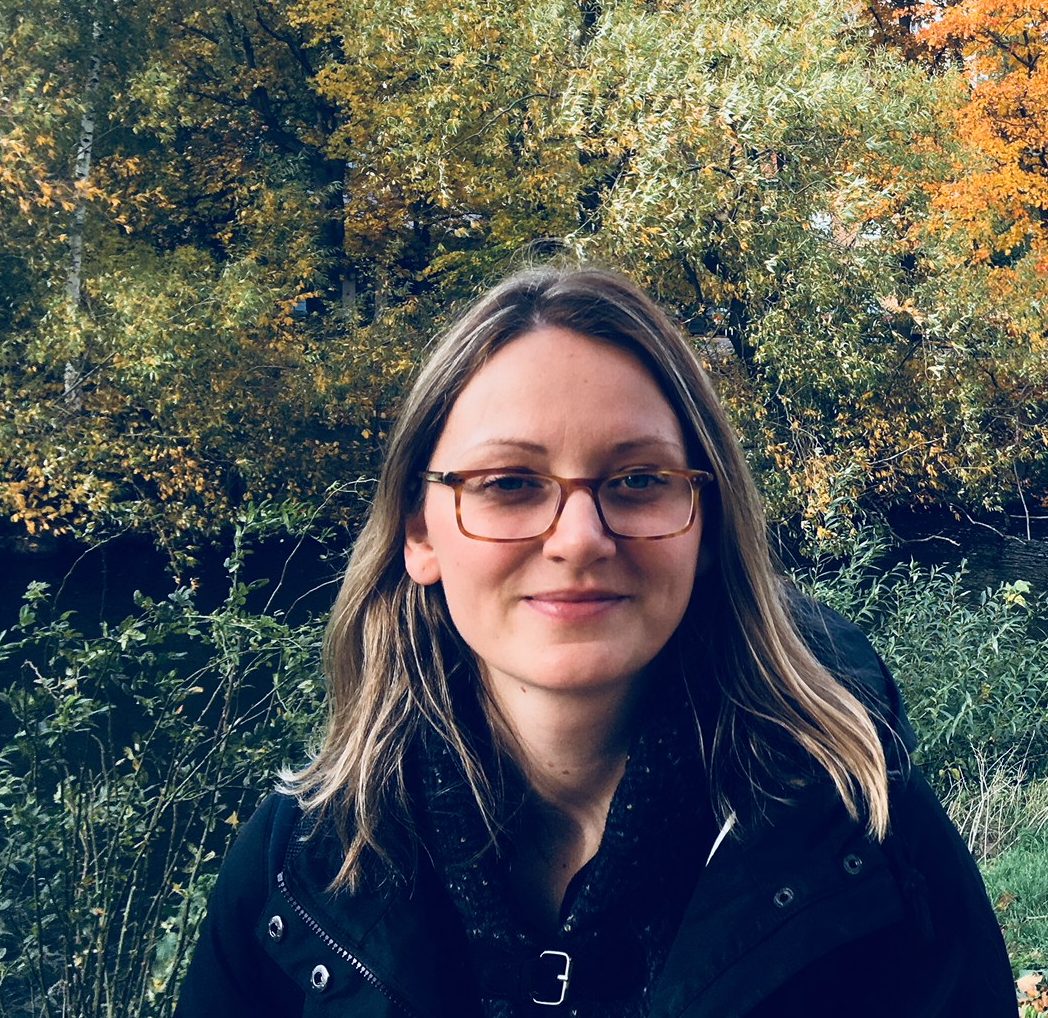
We are pleased to announce that Paulina Semenec is a winner of the 2018-2019 Graduate Student Endowed Awards and recipient of the Jimmar Memorial Scholarship in Education.
Congratulations, Paulina, on this significant achievement!
We are pleased to announce that Paulina Semenec is a winner of the 2018-2019 Graduate Student Endowed Awards and recipient of the Jimmar Memorial Scholarship in Education.
Congratulations, Paulina, on this significant achievement!

We are pleased to announce that Claudia Diaz-Diaz is a winner of the 2018-2019 Graduate Student Endowed Awards and recipient of the Dean of Education Scholarship.
Congratulations, Claudia, on this significant achievement!

EDST PhD Student, Stéphanie Black, receives the J. Korczak Association of Canada Graduate Scholarship in Children’s Rights and Indigenous Education
Stéphanie’s doctoral research explores whether children in Vancouver have equity of access to highly trained school-based sexuality education (SBSE) instructors in Vancouver. During her M.Ed., she learned first-hand about the disparities in SBSE instruction across Vancouver, particularly the challenges faced by children in government care, including Indigenous and marginalized children, in accessing SBSE. This award recognizes the importance of Stéphanie’s research. Well done, Stéphanie!
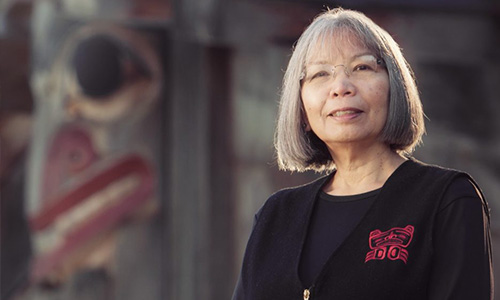
Congratulations to EDST Emerita Dr. Jo-ann Archibald (Q’um Q’um Xiiem) on being appointed as an Officer to the Order of Canada. Governor General Julie Payette made 103 new appointments on December 27, honouring Canadians who have helped shape and innovate societies across the country. This is one of Canada’s highest honours.
Dr. Archibald is an Indigenous scholar, author, and pioneer in the advancement of Indigenous education, as well as the former Associate Dean for Indigenous Education and Director of the Indigenous Teacher Education Program (NITEP).
CBC interviewed Dr. Archibald about her appointment and her work in Indigenous education, which can be read here.
 The Department of Educational Studies is pleased to extend a warm welcome to Dr. Sharon Stein. Dr. Stein joined the department January 1, 2019 as an Assistant Professor!
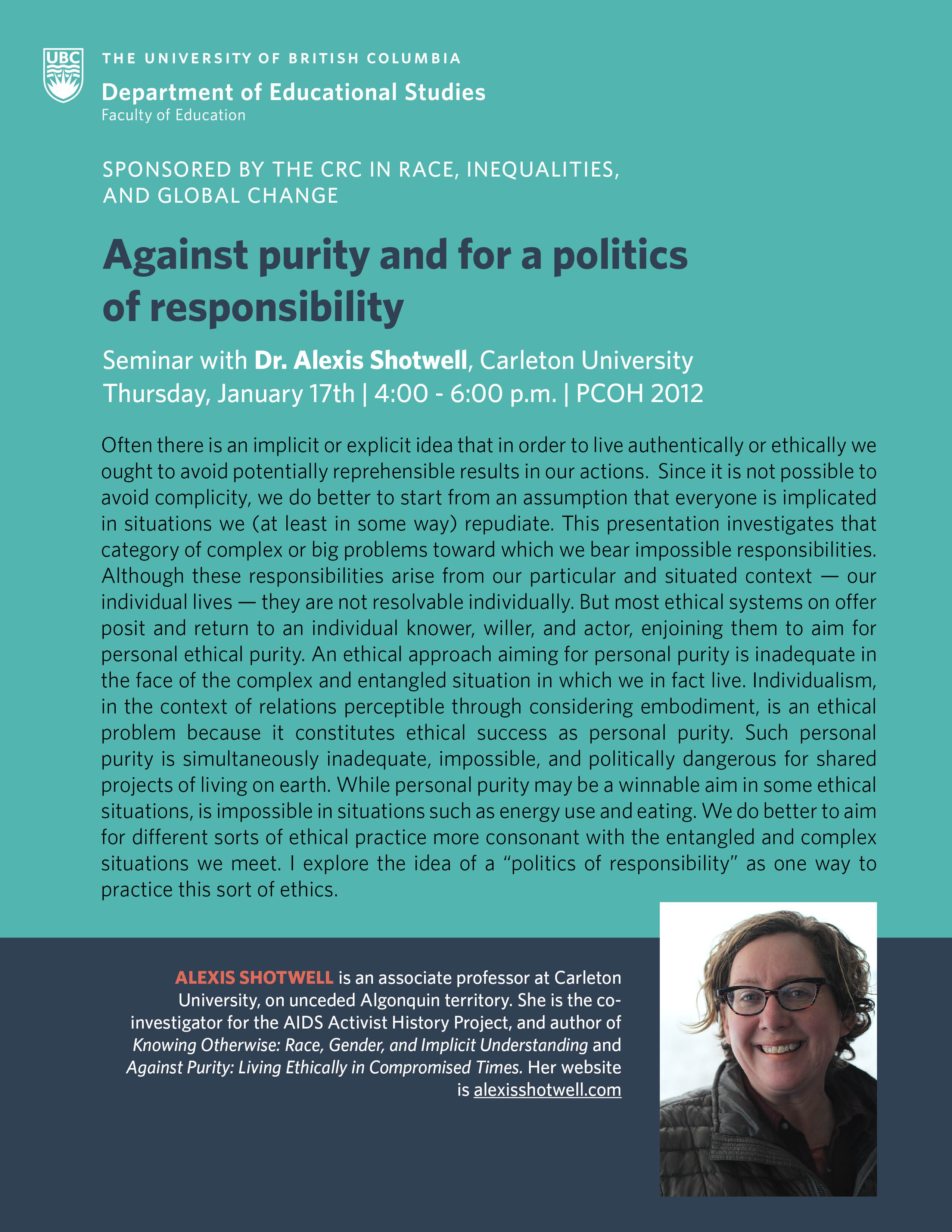
Often there is an implicit or explicit idea that in order to live authentically or ethically we ought to avoid potentially reprehensible results in our actions. Since it is not possible to avoid complicity, we do better to start from an assumption that everyone is implicated in situations we (at least in some way) repudiate. This presentation investigates that category of complex or big problems toward which we bear impossible responsibilities. Although these responsibilities arise from our particular and situated context — our individual lives — they are not resolvable individually. But most ethical systems on offer posit and return to an individual knower, willer, and actor, enjoining them to aim for personal ethical purity. An ethical approach aiming for personal purity is inadequate in the face of the complex and entangled situation in which we in fact live. Individualism, in the context of relations perceptible through considering embodiment, is an ethical problem because it constitutes ethical success as personal purity. Such personal purity is simultaneously inadequate, impossible, and politically dangerous for shared projects of living on earth. While personal purity may be a winnable aim in some ethical situations, is impossible in situations such as energy use and eating. We do better to aim for different sorts of ethical practice more consonant with the entangled and complex situations we meet. I explore the idea of a “politics of responsibility” as one way to practice this sort of ethics.
Alexis Shotwell is an associate professor at Carleton University, on unceded Algonquin territory. She is the co-investigator for the AIDS Activist History Project, and author of Knowing Otherwise: Race, Gender, and Implicit Understanding and Against Purity: Living Ethically in Compromised Times. Her website is alexisshotwell.com
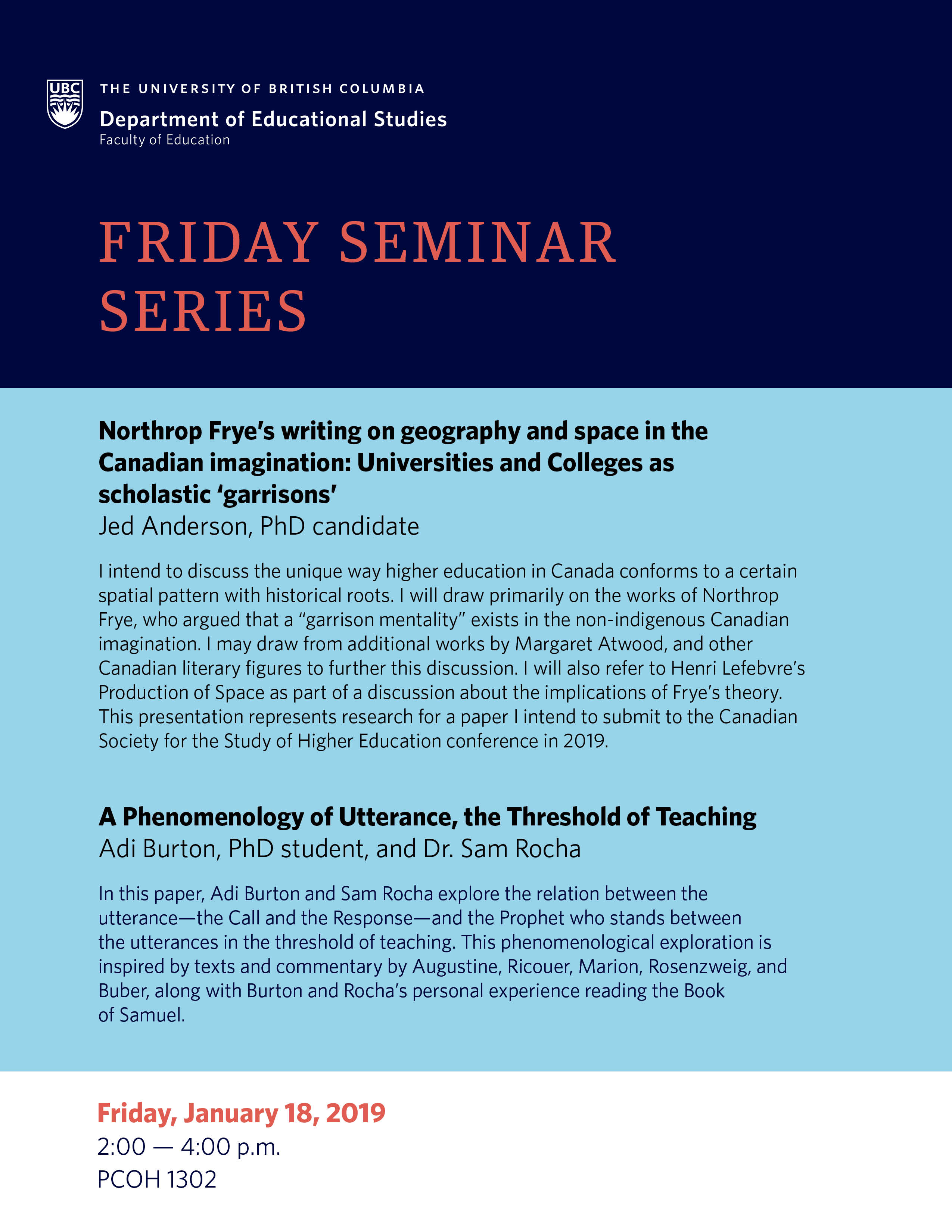
I intend to discuss the unique way higher education in Canada conforms to a certain spatial pattern with historical roots. I will draw primarily on the works of Northrop Frye, who argued that a “garrison mentality” exists in the non-indigenous Canadian imagination. I may draw from additional works by Margaret Atwood, and other Canadian literary figures to further this discussion. I will also refer to Henri Lefebvre’s Production of Space as part of a discussion about the implications of Frye’s theory. This presentation represents research for a paper I intend to submit to the Canadian Society for the Study of Higher Education conference in 2019.
In this paper, Adi Burton and Sam Rocha explore the relation between the utterance—the Call and the Response—and the Prophet who stands between the utterances in the threshold of teaching. This phenomenological exploration is inspired by texts and commentary by Augustine, Ricouer, Marion, Rosenzweig, and Buber, along with Burton and Rocha’s personal experience reading the Book of Samuel.

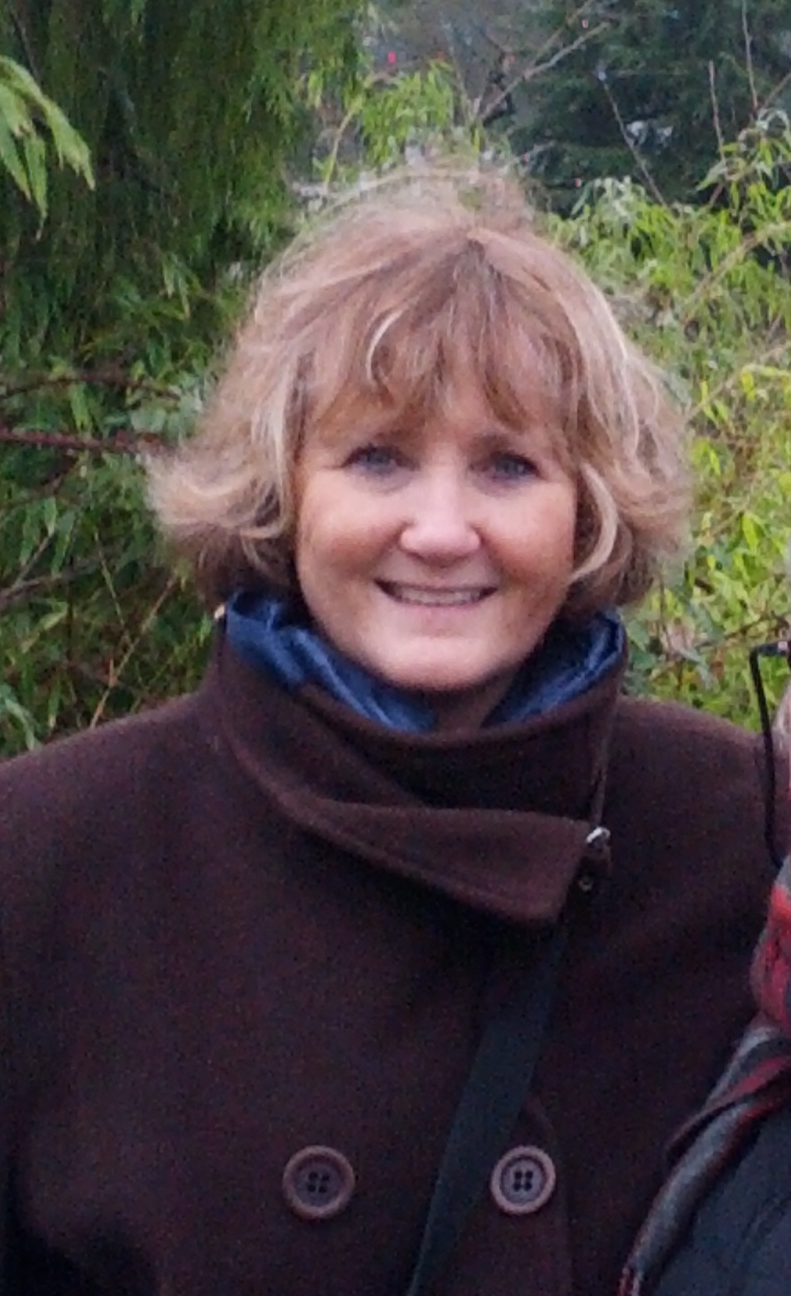
Congratulations to Dr. Shauna Butterwick, who has been inducted into the International Adult and Continuing Eductation (IACE) Hall of Fame! This Hall of Fame has been created to honour leaders in the fields of continuing education and adult learning.
Through her advocacy and research, she has advocated for community as a teacher, advancing how community is a source of significant knowledge, not just a site of research and learning. In partnership with national and local women’s organizations, Butterwick’s research through collaborative, community-based inquiry not only extends academic knowledge of the field, but makes a difference to the practice of adult education within grassroots organizations. Through all of her efforts, Butterwick has moved women’s learning and leadership within Canadian adult education out of the shadows and into the light.
Read Dr. Butterwick’s entire citation here.
The induction for the class of 2018 was held November 10 in New Orleans, Louisiana. This year marks the 23rd anniversary of the Hall of Fame.
Friday, December 7, 2018
2:00 – 4:00 PM
PCOH 2012
Since my dissertation deals with the pedagogical possibilities of humor and comedy, it is timely to focus on natural disasters such as earthquakes to explore how people affected by them might find, share or create humor in disaster. The Mitacs research focuses on how people who have experienced natural disasters might make meaning, through humor, of these experiences. At the same time, it might provide insight into the political, cultural and social processes through which this humor reveals, shares and produces cultural memories.
This work positions public mass gun violence (PMGV) as an intergenerational consequence of colonization, coloniality, and slavery in the United States. I map how the shooter’s white privilege, alongside his white/male fragility, combined with a national consciousness built on an ethos of colonization and coloniality, leads him to believe he has unearned “rights” to the social riches of the center.
I proffer that most of us who benefit from capitalist, neo-liberal, patriarchal state and social institutions are complicit in co-creating the conditions that produce PMGV’s gunmen because in order to exist in such a capacity, we perpetuate a system of insiders and outsiders. As illustrated, possibilities for allaying violence are located in practicing critical self-reflection and “pedagogies of discomfort” (Boler, 1999) that can counter bureaucratic expectations of submissiveness.
Boler, M. (1999). Feeling Power: Emotions and Education. New York: Routledge.